Translate SQL queries (dialects)
You can translate SQL queries from one dialect to another using Altimate Code. For example, translate a query in Postgres SQL dialect to Snowflake SQL dialect.
Requires the Datamates extension
The Translate with Altimate action opens a chat session through the Datamates extension. Make sure Datamates is installed and active before invoking it.
Supported SQL dialects
bigquery, clickhouse, databricks, doris, duckdb, hive, mysql, oracle, postgres, redshift, snowflake, spark, sqlserver, starrocks, synapse, teradata, trino
Step 1: Create a new file and add the SQL query
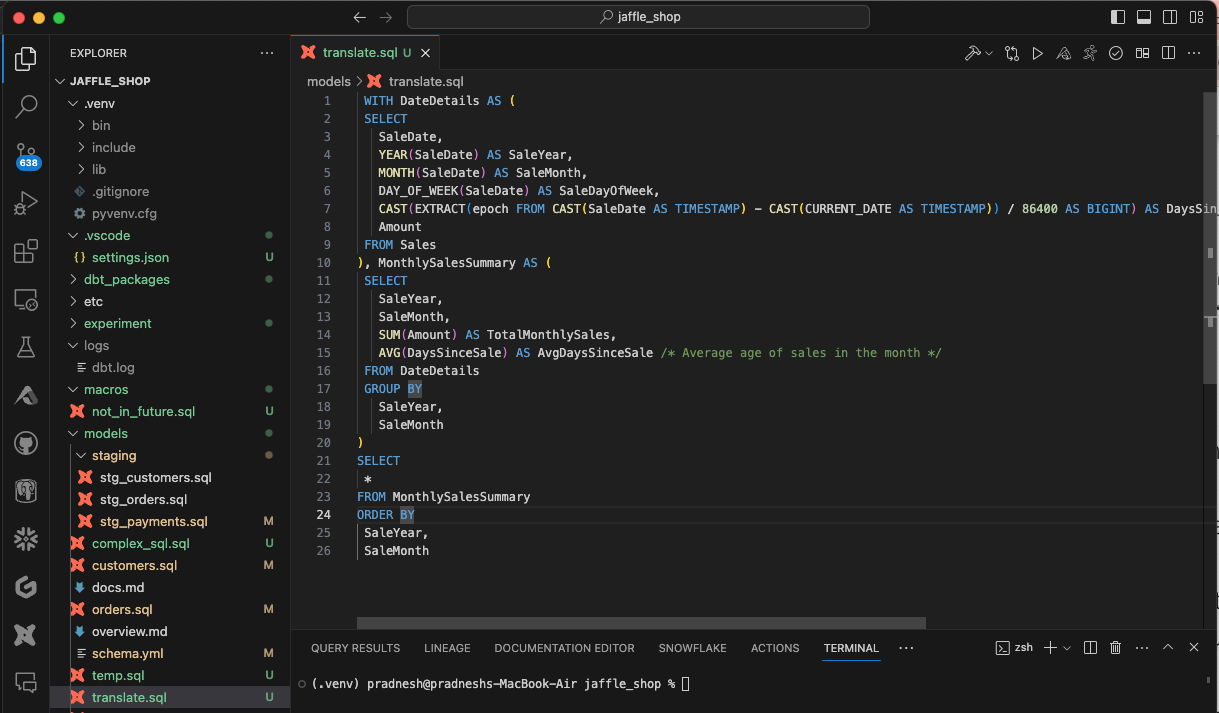
Step 2: Right-click → Altimate Code → Translate with Altimate
Open the right-click context menu on the .sql file, expand the Altimate Code submenu, and select Translate with Altimate.
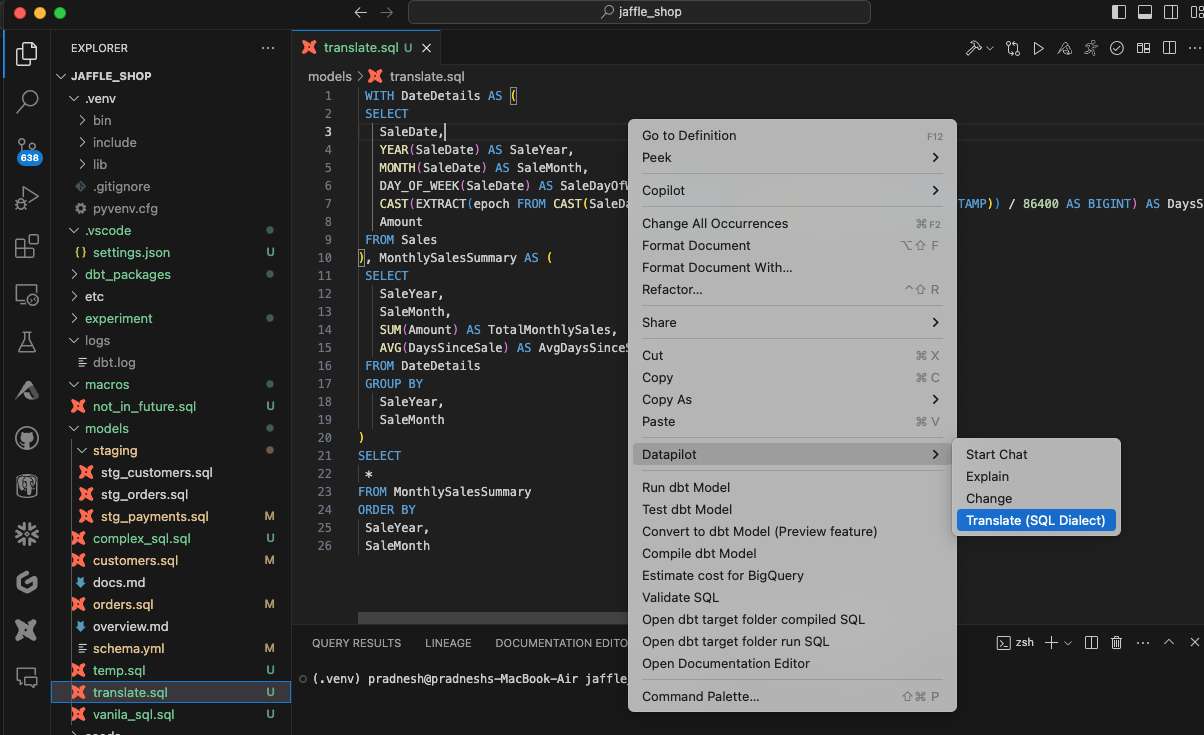
Where to find it
The Altimate Code submenu shows four default actions: Explain, Optimize, Change, and Translate. Translate with Altimate is the fourth entry and only appears on .sql / .jinja-sql files.
Step 3: Pick source and destination dialects
A two-step quick pick appears in VS Code:
-
Translate SQL — Step 1 of 2 — pick the source dialect (the current dialect of the SQL in the file).
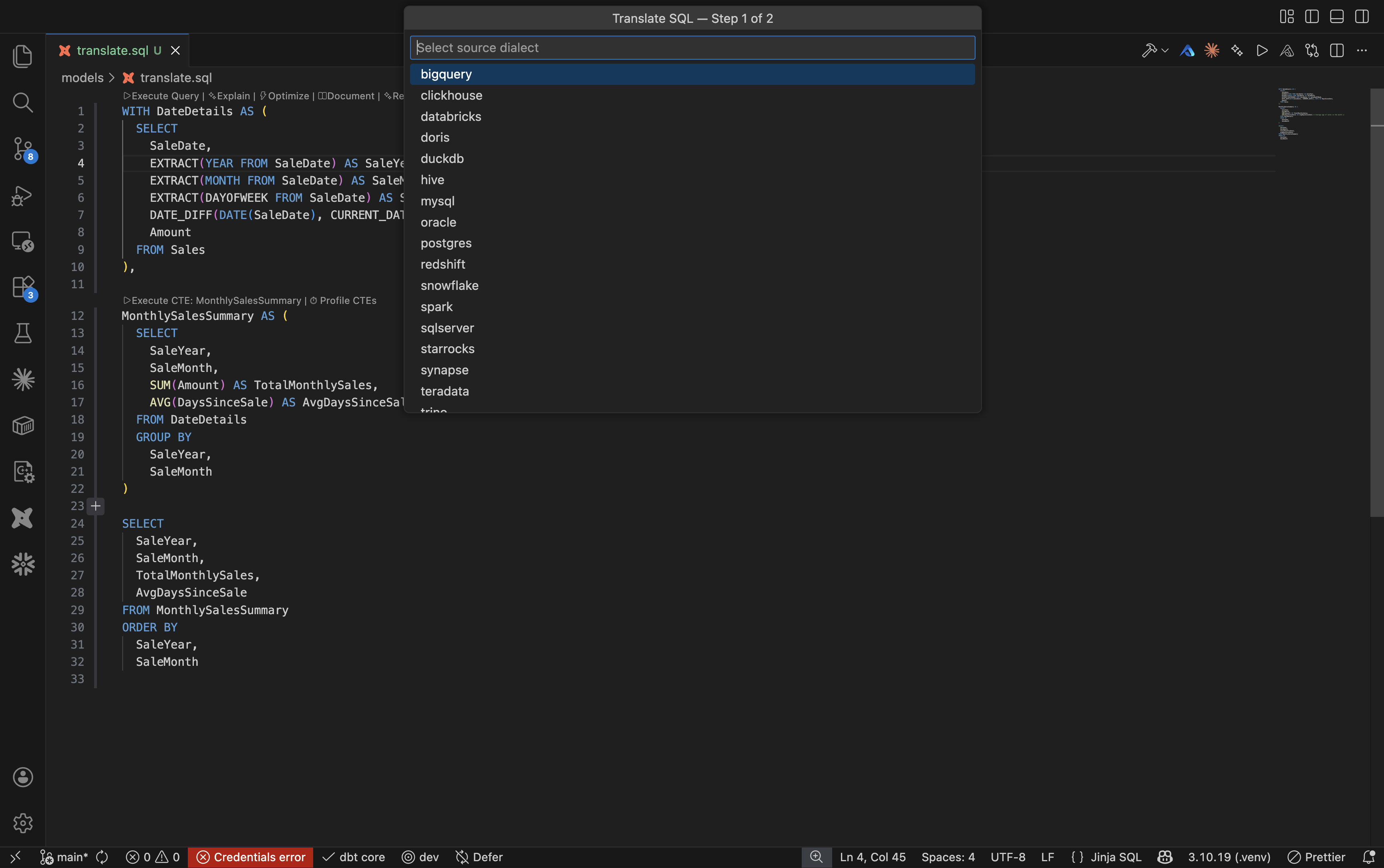
-
Translate SQL — Step 2 of 2 — pick the target dialect (the dialect you want to translate to). The adapter type of your current dbt project is bubbled to the top of the list and marked "current project" — you can pick it or choose any other dialect.
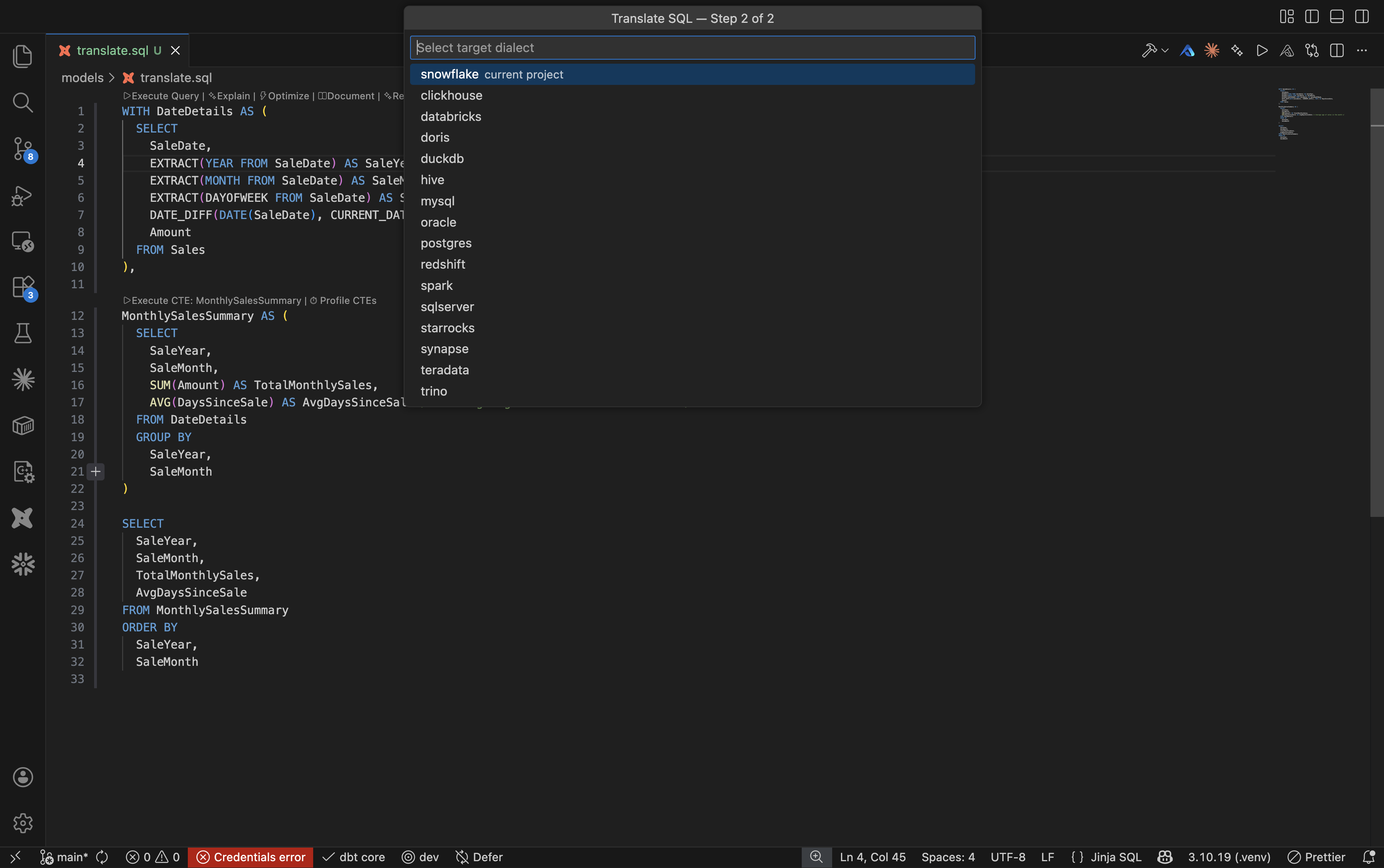
Translation works on the whole file. Altimate Code will treat the entire file as the source query.
Step 4: Review the translated SQL and explanation
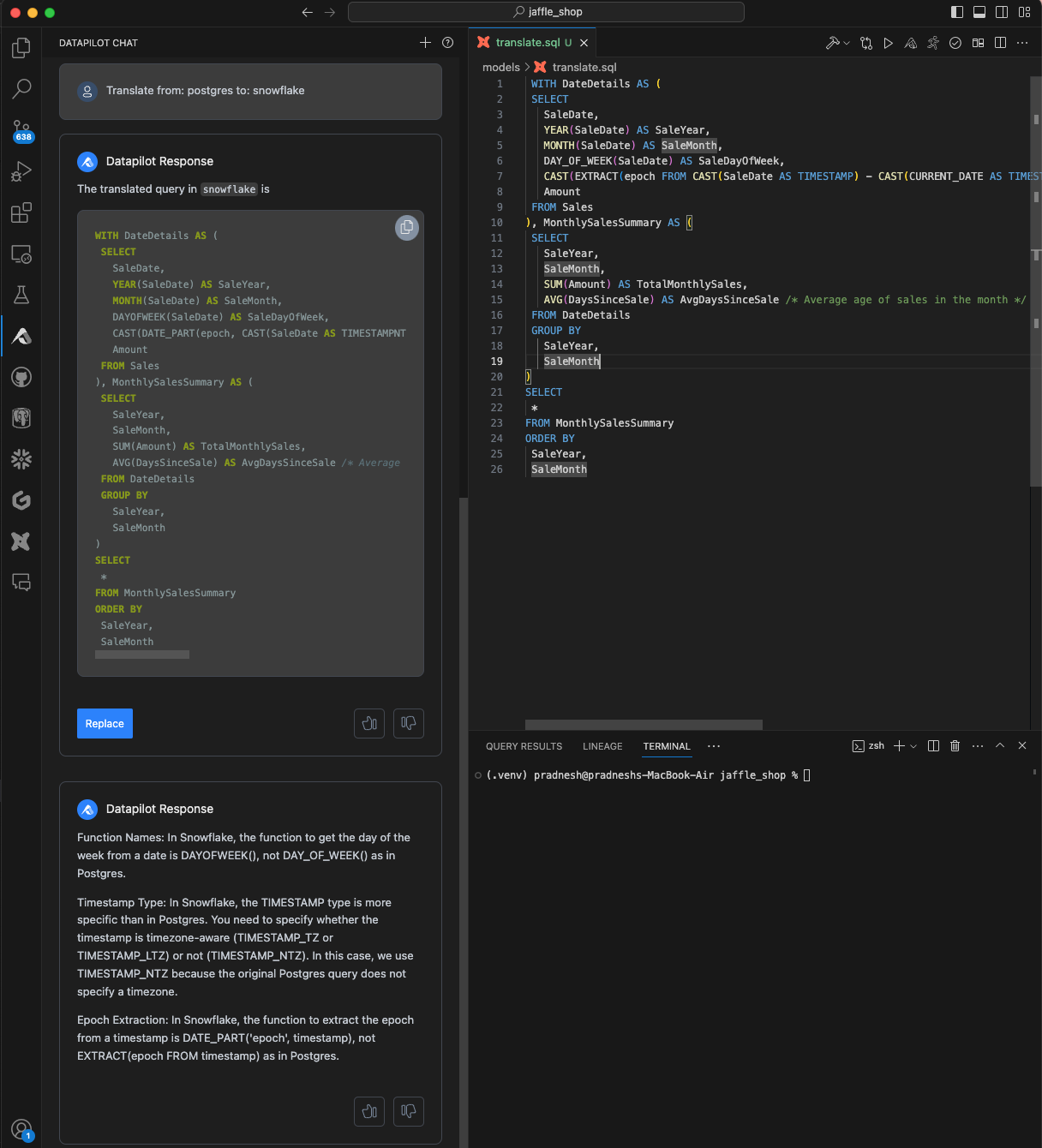
Once both dialects are selected, Altimate Code opens beside the editor and returns the translated SQL alongside an explanation of what changed. Different databases use different functions and syntax for the same operation — Altimate Code translates the differences and explains them.
Step 5: Convert SQL to dbt Model (optional)
If needed, you can convert the translated SQL into a dbt model with the SQL → dbt Model functionality.
Limitations
Following are a few limitations
- If there are functions we can't identify, we will not be able to convert them — they are kept as-is.
- We do not look at data types. If the target database does not support some data types, those may not be translated.